
Meet the West Health Accelerator Team: Claire Morton, MD
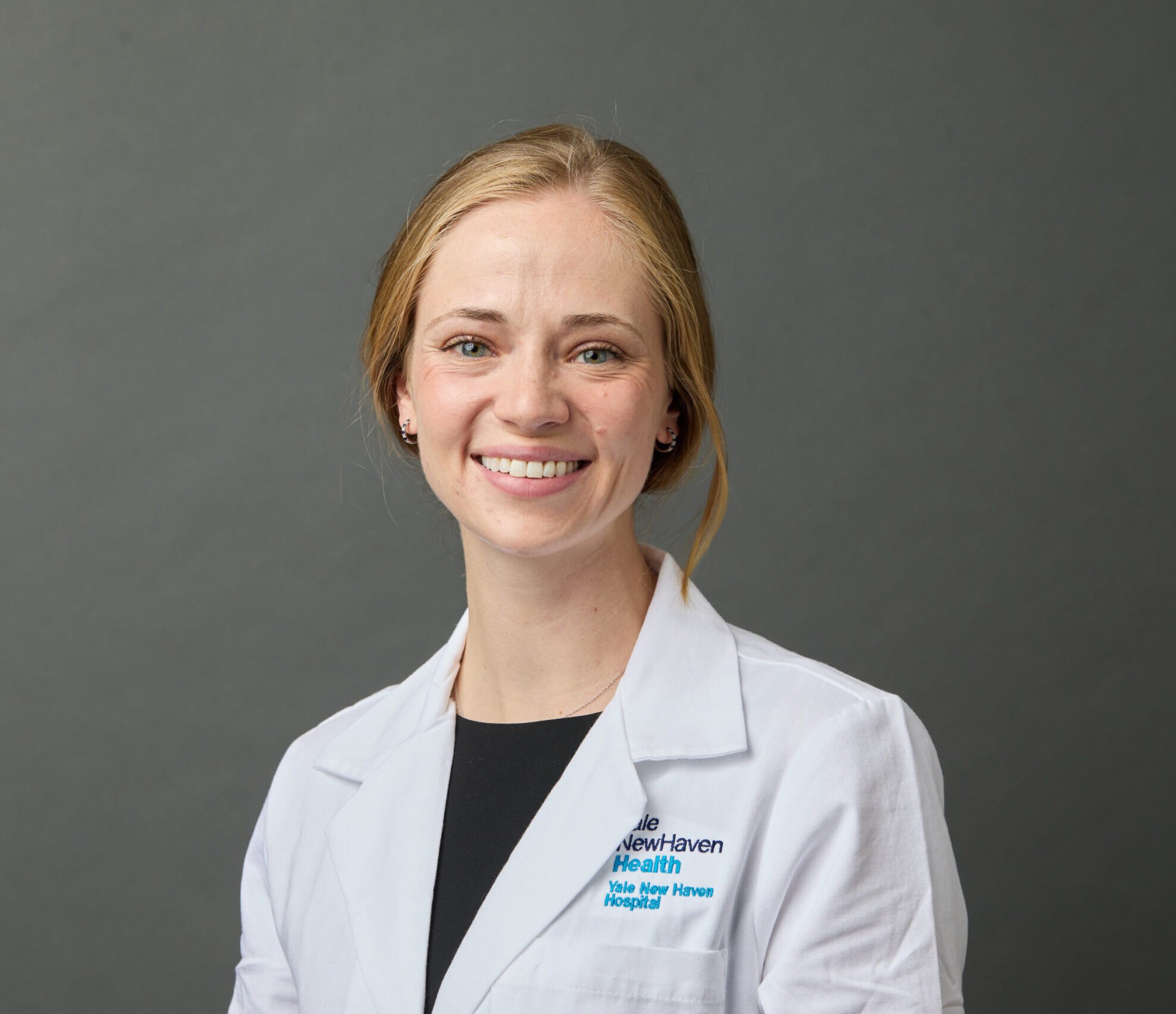
A physician-researcher, Dr. Claire Morton is currently a second-year MERITAS fellow at the Center for Surgery and Public Health at Brigham and Women’s Hospital.
As a MERITAS fellow, Dr. Morton is helping advance the use of patient-reported outcome measures (PROMs) for the West Health Accelerator at Mass General Brigham. Her work helps to bring the patient’s voice into clinical evaluation and recovery.
What drew you to focus on aging and healthcare?
Claire Morton: My grandmother, “Memere,” died of a surgical complication when I was in middle school and my other grandmother, “Dandy,” died of breast cancer when I was in high school. Inspired by these experiences, I went to college thinking I wanted to do healthcare research with a focus on aging, but over the course of those four years, I came to the conclusion that I didn't want to just do research; I really wanted to treat patients. I spent a year after college applying to medical school and working as a nursing assistant with home care patients, hospitalized older adults and hospice patients, while concurrently interning at the National Hospice and Palliative Care Organization.
Heading into med school, it was fully my intention to become a geriatrician until I did my surgery rotation and fell in love with the practice of surgery. I saw how oftentimes surgical patients, particularly older adult surgical patients, could benefit from that lens of thinking more about what it's like to be an older adult in the hospital. As I was coming up in surgery, I discovered Dr. [Zara] Cooper's work and was really inspired by her and Dr. [Rachelle] Bernacki and everything they were doing to pioneer improving surgical care for older adults. Dr. Cooper welcomed me with open arms as a MERITAS fellow, which I've learned is her style as a mentor—making people part of the team and enabling them.
What are patient-reported outcome measures (PROMs) and why are they important?
CM: After patients are discharged from the hospital, their inpatient care team rarely hears how they’re doing once they’re home or in rehab. As part of the Accelerator, a new questionnaire launching this summer will ask patients to share what their days look and feel like in the weeks after discharge. The questionnaire is built around a panel of seven PROMs, all of which capture the patient’s experience after discharge, from their own perspective, mapped to the 4Ms — mobility, mentation, medication, and what matters. I think this will give us a really unique window into what's going on when patients leave the hospital. Right now, it’s this big black box.
What inspires you?
CM: The patients and the opportunity to make things better. When I was on my surgery rotation as a med student, we had an older adult who was delirious and couldn't eat. We didn't have the resources to help her, but because of my nursing assistant background, I said, “Let me just sit with her and feed her mashed potatoes so she gets the nutrition she needs and can avoid the feeding tube and hopefully reduce the likelihood of her delirium getting worse.” The West Health Accelerator gives me real hope that similar patients will automatically get that type of care.
How does it feel to be part of the Accelerator team?
CM: This is the most incredible team I’ve ever been a part of. I’m inspired by everyone that we’re working with. It feels like everyone on the team is someone I’ve been looking up to for the past decade—people whose papers I’ve read, whose work I’ve followed. There’s real momentum here behind something that has long been talked about, and we’re developing interventions that really make a difference. Older adults don’t always get the attention they deserve, and it really feels like this infusion of energy and resources is making change happen. The West Health Accelerator is giving this team the freedom to think big and the resources to make change at a system level that will hopefully inspire other systems to do the same.