
Meet the West Health Accelerator Team: Mallorie Barber
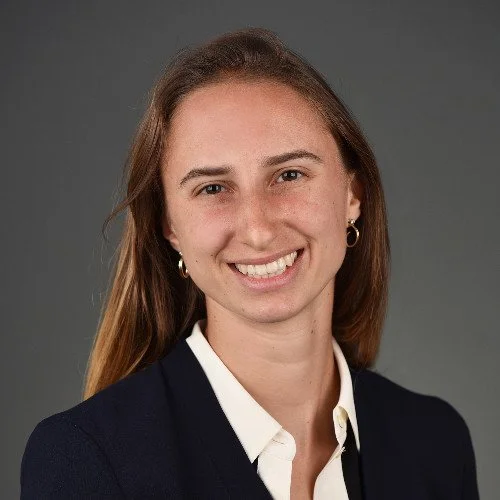
Mallorie Barber is a healthcare senior director at Huron Consulting Group.
In this role, Mallorie works closely with leaders of the West Health Accelerator at Mass General Brigham to help implement system-wide changes to improve care for older adults across the health system, while helping prepare a blueprint that can be replicated across the country.
Q&A
What is your role on the West Health Accelerator team?
Mallorie Barber: Running an implementation like the West Health Accelerator across nine hospitals is very complex. My team at Huron and I have experience guiding other organizations through massive transformations, and we are here to help provide the Mass General Brigham team with coaching and advice on the process. For example, we are sharing the kinds of barriers that we've seen and helping them think about what can help them move faster. We’re also providing some insight around how to scale this initiative nationally, which is the next step of the work. It has been such a pleasure to advise and coach this incredible group. They have wonderful leadership and a strong team. They are the ones on the ground doing the day-to-day work.
What drew you to a career in healthcare?
MB: I’ve always been passionate about helping people access healthcare. I think healthcare ought to be a human right, and sometimes we don't think about it that way. So, whatever I can do to improve the quality of care and the access of care to every person is very compelling. I've also had grandparents who have gone through the healthcare system, and things didn't go as planned. Now that I'm learning more about care for older adults, there's so much I wish I had known.
What excites you about the work of the Accelerator?
MB: I think there is a future of healthcare that isn’t about “tech hype,” but is about looking at clinical models and how we deliver care. There is such an opportunity to use operational expertise to ensure that older patients receive the care that is most appropriate for them. Through the Accelerator, we are taking standard best practices for older adults and ensuring they are done every time, for every patient, in the easiest way as possible. We're taking this extra work away from clinicians, so they can focus on the more complex aspects of care. I think we can really move the lever on healthcare with the West Health Accelerator because older adults make up half the patients at Mass General Brigham, and half of all patients nationally.
Is there anything you’ve learned from your work on the Accelerator?
MB: I think the biggest learning for me has been how appreciative the clinical staff have been about the Accelerator so far. They have said it's easy, it's intuitive, and it's the right thing to do. Having done a lot of large implementations across systems, I know that type of positive feedback is rare — you usually encounter resistance. I think it’s because the leaders are encouraging and engaging the team and want feedback, but they are also providing the right amount of direction. That balance is what makes this team so successful and resilient.
I’ve also learned that people care about the Accelerator because it's so relatable — everyone has an older person in their life who has been through an experience where the care they received in the hospital was not what it should have been. So, we’re all excited to see the changes come through, and that excitement is what's going to make this work persist and be scalable.
What is one thing you’d like others to know about the Accelerator?
MB: We are working with West Health to start scaling the work this year, starting with smaller outreach. We want other healthcare systems to use the Accelerator, and we also want their input. If anyone is interested in how this work could improve the care in their own organization, they should absolutely reach out to us.