
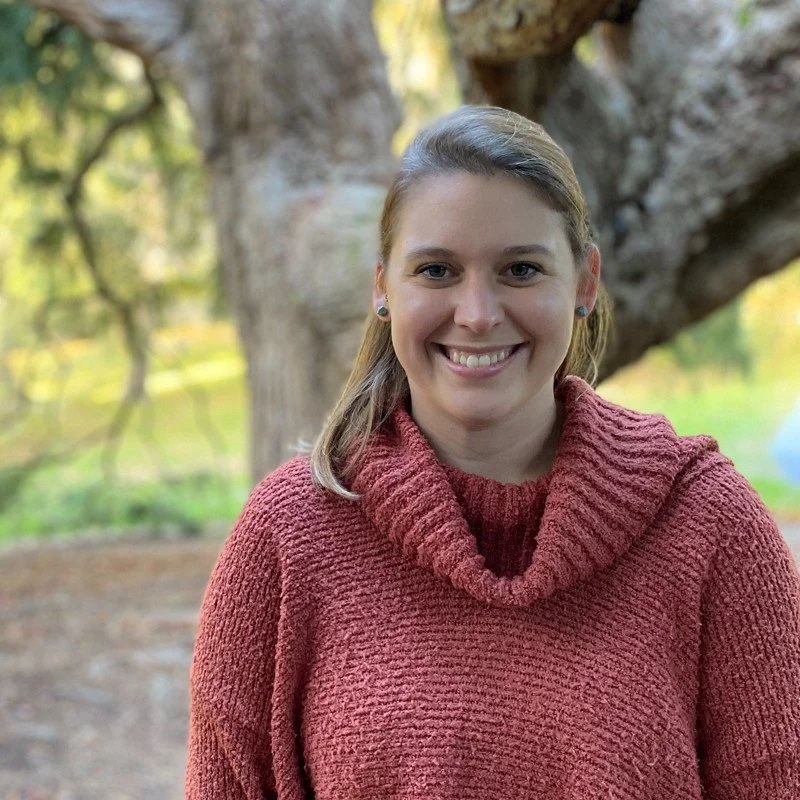
Sarah Figgins is a senior occupational therapist in Inpatient Rehab at Brigham and Women’s Hospital.
She provides skilled inpatient occupational therapy services to patients with a variety of conditions and is also part of the West Health Champions Program.
Q&A
Why are you passionate about caring for older adults?
Sarah Figgins: I love caring for older adults because I'm honestly always learning something new from them. They bring perspective, resilience, humor and an incredible depth of lived experience into every interaction. Even on someone's hardest day, there's often wisdom there, and that's a privilege to witness.
Can you share a moment caring for an older adult that really resonated with you?
SF: Earlier in my career, while working at an inpatient rehab hospital, I worked with an older man who had Guillain Barre syndrome. He couldn't move his legs, and he had lost so much independence practically overnight. I remember feeling unsure of myself, wondering if I was offering enough as a new clinician. I showed him how to use a simple reacher tool, something small, inexpensive and easily overlooked, and the way that he responded changed some of my perspective. He was deeply grateful, not just for the tool, but what it gave back to him. Choice, dignity and independence. In that moment, I realized that occupational therapy (OT) isn't about gadgets or exercises. It's about helping people live their lives, even in the middle of illness.
What have you learned from other Champions that has shaped your thinking or expanded your perspective?
SF:In acute care, OT plays a critical role in outcomes that matter most to older adults — mobility, cognition, independence and the ability to age in place. We don't just treat the diagnosis someone was admitted for. We help them function after the hospital, and that can be the difference between returning home or not. Through the West Health Accelerator, I've gained a deeper appreciation for how closely OT aligns with the 4Ms framework: mobility, mentation, medication and what matters most. What's been powerful is seeing how naturally our work connects across disciplines and how much opportunity there is to collaborate earlier and more intentionally across departments.
This perspective really clarified for me last year when I went to an OT conference. I learned about delirium prevention through Johns Hopkins University. Their research showed that some of the most effective interventions are often the simplest: orientation, sensory input, meaningful activity, mobility. This insight directly inspired the project I'm working on now, focusing on non-pharmacological delirium, intervention and prevention, and equipping care teams with simple, scalable tools like activity boxes that can be used across many hospital units.
Looking ahead, what is one change—big or small—you’re motivated to lead or advocate for?
SF: Looking ahead, I'm motivated to help lead change and how we approach delirium by sharing OT knowledge more broadly, training staff and embedding prevention into everyday care. It's a small shift in practice that can have a huge impact on recovery, length of stay and long-term quality of life. At the end of the day, what matters most to patients isn't just surviving hospitalization, it's how they live afterward.
I'm incredibly grateful to be part of the West Health Accelerator, and I'm excited to keep collaborating, because when we design care around function, dignity and what truly matters, everyone wins.