
Champions in Action: Getting Patients Mobile and Moving
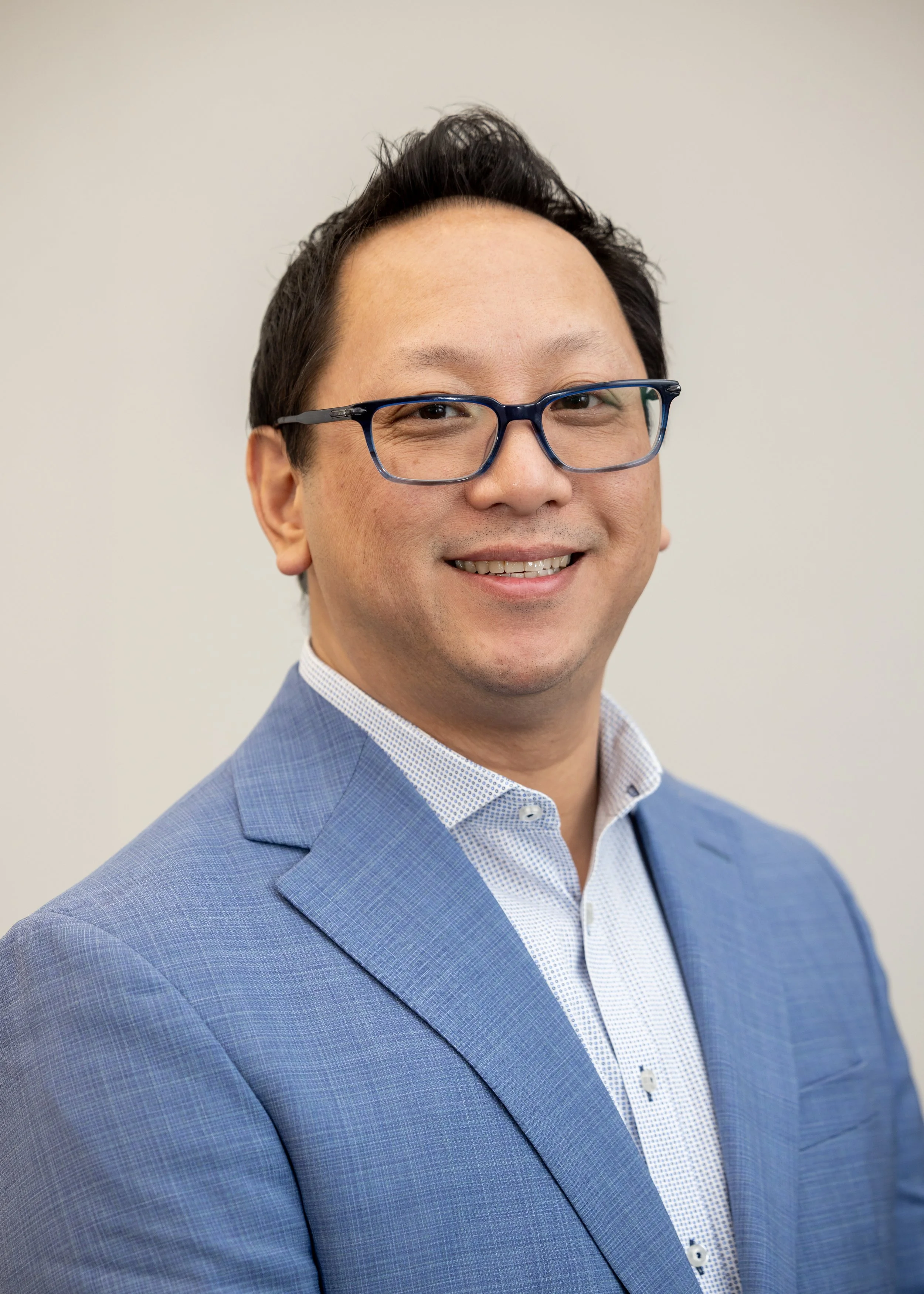
Dr. Cyrus Yau is the medical director of the Hospitalist Program and the chair of pediatrics at Cooley Dickinson Hospital. We spoke with Dr. Yau last year, when he had just begun participating in the West Health Champions program to ask what inspired him to participate and what he hoped to achieve in the program. Now a recent graduate of the inaugural cohort of Champions, Dr. Yau again spoke with us again to share his thoughts on the year-long Champions training and the results of his team’s quality initiative (QI) project.
Name of QI project: Get Mobile, Get Moving.
Q&A
Why did you choose to focus on mobility?
Cyrus Yau: Our group at Cooley decided to focus on something to do with mobility in part because we have the only volunteer program that mobilizes patients in the Mass General Brigham system. We have an occupational therapist (OT) and a physical therapist (PT) who train volunteers to come into the hospital and mobilize our patients. We felt this program could be utilized more, and we incorporated that into our QI project.
I felt this was something that we could all really feel invested in because everyone's job is impacted by patients’ mobility. It felt like there was going to be a huge value in improving mobility in the hospital.
What was your goal?
CY: Our goal was to increase the percentage of patients over age 65 on the telemetry unit who ambulated at least three times a day to 50% above baseline by June 1, 2026. We aimed to do this by introducing the Johns Hopkins Highest Level of Mobility (JH-HLM) education to our nursing staff and encouraging medical staff and patients to use in-room mobility speedometers.
Who were the participants?
CY: On our team we had hospitalists, nurse educators, nursing leaders, patient care assistants (PCAs), PTs, and OTs. Pharmacy was also involved to a lesser extent, but I'm hoping to get them more involved in future projects. It was a good mix from all facets of the hospital and included all the providers involved in patient care.
What training was involved?
CY: We provided education during our staff meetings and rolled out a health education module for the nurses and PCAs. One of our nurse educators, Kathy Hutchins, also did one-to-one training to review and reinforce the JH-HLM, and how to input it into Epic. Our OT was also instrumental in helping to train our unit directors on how to safely mobilize patients, and they were able to continue to educate the nurses and carry that forward.
Every week during our high reliability organization (HRO) rounds, we put up the mobility numbers on our dashboard, so the nurses knew where we started and where we were now. This continued to reinforce the JH-HLM and made sure everyone knew how to enter it properly. I think that one-to-one training really made a difference in increasing the nurse's comfortability with mobilizing patients and how important it is. Reinforcing that every week at HRO rounds also brought it to the forefront of everyone's minds, so they understood it was front and center in patients’ health.
How did you use the mobility speedometers?
CY: We worked with Springboard Studio, who partnered with the West Health Accelerator to help design the speedometer, and tailor it specifically for each hospital. Essentially the speedometer is a laminated poster that hangs in each patient’s room. It is there to remind patients and their providers that they need to do a certain mobility activity at least three times a day, based on their baseline mobility. For some patients, that might mean sitting up in bed or going to the bathroom and for others it might mean doing a certain number of steps around the halls.
The goal was to make the speedometer visible to patients, their families, and their healthcare providers, so it could be a point of discussion. Nurses could use it to point out a patient’s mobility goals for the day, and their families could see it and help participate in their mobility. And then when the physicians came in to talk with patients, they could also bring it up. We wanted something visible that everyone could rally around to make sure that everyone knew what their goals were every day.
How did you track your progress?
CY: As nurses and PTs entered the JH-HLM for patients, it was charted as a mobility. If they marked down a JH-HLM score three times a day for a patient, it registers that they've that they've mobilized three times that day.
At baseline, I think we were very low, at 0.5 or so. But we knew some of that was lack of documentation. We knew that patients were being moved, so one of the first hurdles was making sure that medical staff were documenting what we were already doing. Then we started to improve on that. By the time we presented our project in June, we were close to 2.5 mobilizations per patient, and in July we hit 3.1 mobilizations. Our next goal is to sustain that work to make sure we're consistently above three[SP1] .
Key takeaways?
CY: What was most poignant for me was seeing that our two strongest interventions were the one-to-one education with the nurse educator and the ability to utilize our volunteer program. It was clear that having a human connection paired with visible and physical learning is really important for this kind of a project.
Did your experience in the Champions program meet your expectations?
CY: Yes, it did. I learned a ton from the West Health Accelerator program and have been able to implement some great changes here at Cooley. And even though our year-long Champion program is over, we'll continue to have collaborations with the West Health team. I look forward to seeing what the next generation of Champions does so we can continue to learn from each other and create systemwide transformation across Mass General Brigham.